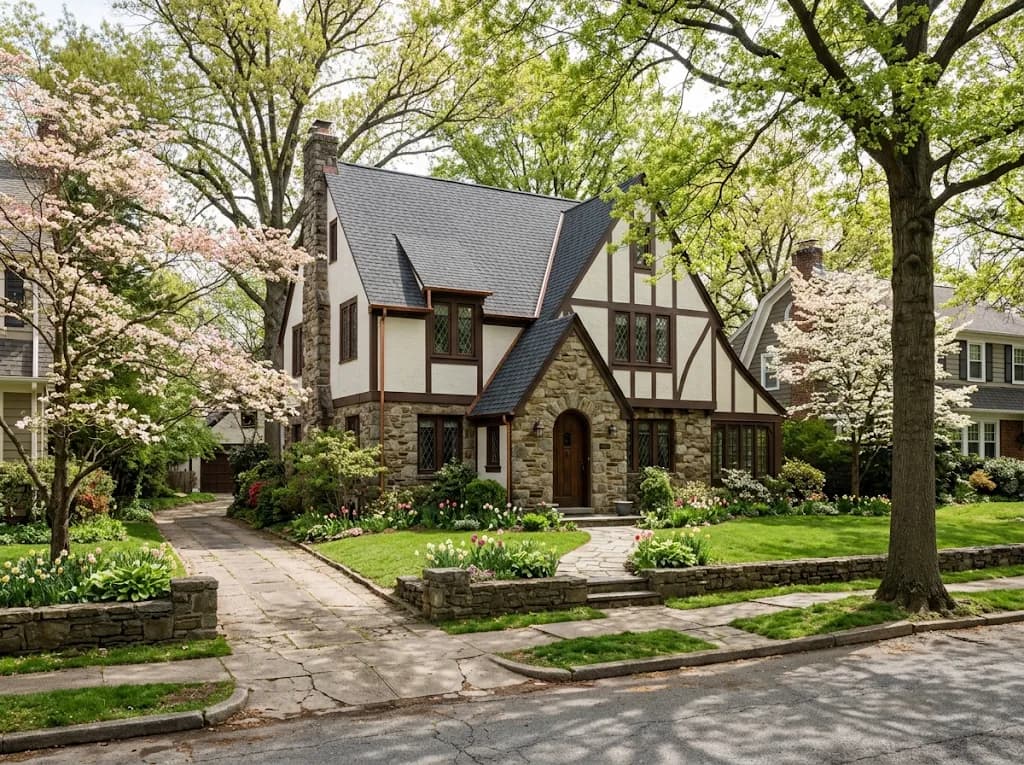
A streetcar suburb on the West Shore
Camp Hill was incorporated as a borough on November 10, 1885, carved out of East Pennsboro Township, after going by several other names, including Hendricks and Fort Pleasant. It grew as a streetcar suburb in the early 20th century and has always been mainly residential, made up principally of single-family homes.
The roofs on Camp Hill's houses
Streetcar-era houses brought steep, complicated roofs: Tudor Revivals with cross gables and tall chimneys, Colonial Revivals with dormers, and bungalows with low porch roofs. Postwar houses added simpler gables and hips.
- Steep Tudor roofs take longer to replace and need careful flashing at every gable.
- Dormers need new step flashing and attention to their own small roofs.
- Porch roofs that are too flat for shingles need membrane.
- Chimneys on older houses usually need new counter-flashing.
See also: Asphalt shingle roofs · Slate and metal roofs
Before the roofer arrives
- 1Ask the borough whether a permit or zoning approval is needed.
- 2Check the contractor's Pennsylvania registration number.
- 3Read the contract, and note your three-business-day right to cancel.
- 4Clear the driveway and protect plantings near the house.
Questions
+Does Camp Hill require a permit to replace a roof?
Pennsylvania's code generally exempts residential re-roofing from a state permit, but a borough can adopt its own requirement. Confirm with Camp Hill borough before work begins.
+My Tudor has a very steep roof. Is that a problem?
Not a problem, but it means more staging and safety equipment, so the job takes longer than a simple gable of the same size.